Inflation refers to the increase in the money supply, which usually leads to a decline in the purchasing power of money. As prices rise, consumers’ actual purchasing ability decreases, causing traditional savings and monetary assets to lose value in real terms. During periods of inflation, savings and interest rates often fail to keep up with the rising prices, leading to a continuous decline in the real purchasing power of money. Additionally, stock and bond markets tend to become more volatile, increasing uncertainty for investors. In such a scenario, it becomes crucial for investors to find an asset that can preserve its value and protect their wealth.
In this economic environment, many traditional investment methods, such as bank deposits, bonds, or stocks, often fail to withstand the impact of inflation. Bank deposits typically offer interest rates that cannot keep pace with inflation, causing the investor’s wealth to depreciate in real terms. Moreover, the volatility in the stock market and bond market often increases during periods of economic uncertainty, with prices affected by economic policies and market sentiments, leading to instability in assets. Therefore, investors need to find an investment tool that can effectively combat inflation and protect their wealth.
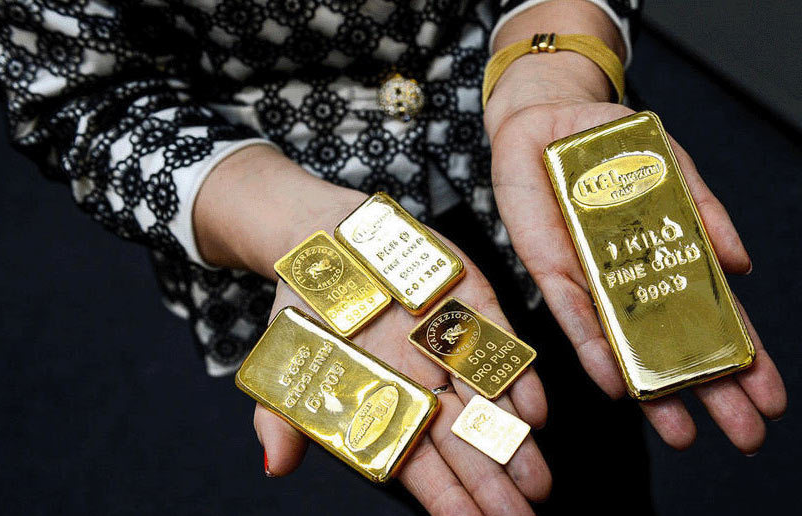
Against this backdrop, gold hedging has become a key investment option during periods of inflation. Gold, as a safe-haven asset, has a significant negative correlation with currency devaluation and financial market fluctuations. When currency devalues, the value of gold typically increases because gold, being a finite resource, has intrinsic value and is not impacted by currency devaluation. Historically, whenever the global economy has faced high inflation, the price of gold has tended to rise continuously, making it an ideal choice for investors seeking to avoid the effects of currency devaluation.
Furthermore, gold maintains relatively stable value and can resist the pressure of rising prices during inflation. For example, during the high inflation in the U.S. in the 1970s, currency devaluation caused gold prices to rise significantly, and gold became a safe-haven asset for wealth protection. Compared to stocks and bonds, gold is not directly influenced by government policies or economic fluctuations, thus providing more stable value protection for investors.
In conclusion, inflation has a significant impact on wealth, and choosing the right hedging asset can effectively protect an investor’s wealth. In such an environment, gold hedging becomes a critical investment option. It not only combats currency devaluation but also provides investors with a stable way to grow and preserve their wealth.