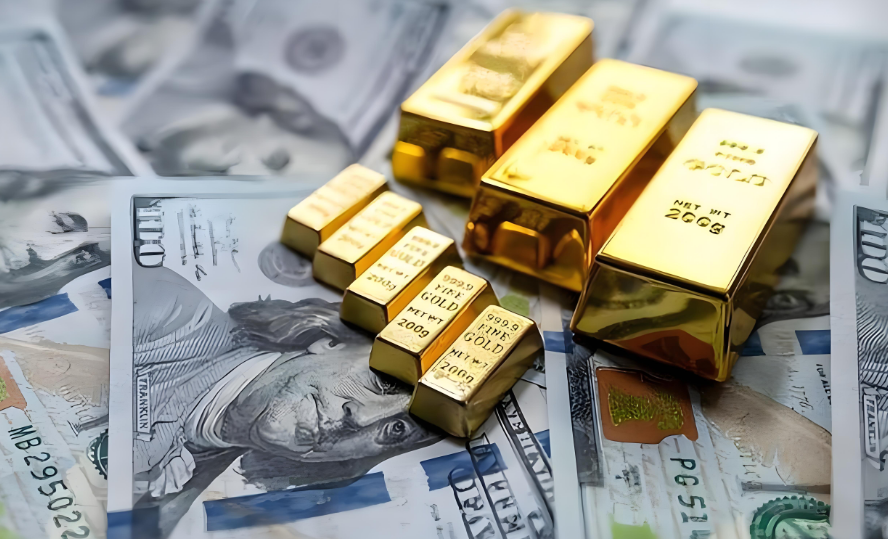
In global financial markets, the strong U.S. dollar and gold prices’ inverse relationship is an essential factor for investors in asset allocation. When the dollar strengthens, gold prices typically fall, creating unique investment opportunities. This article will explore how to leverage this relationship to help investors make smarter investment decisions when the dollar is strong.
Why Do Gold Prices Fall When the Dollar Strengthens?
The inverse relationship between the dollar and gold prices stems from their relative roles in the market. First, gold is priced in U.S. dollars, and when the dollar appreciates, gold becomes more expensive for holders of other currencies, leading to reduced demand and lower prices.
Furthermore, a strong dollar usually signals a stable economy, especially when U.S. economic data is favorable. In such times, investors tend to allocate funds to riskier assets such as stocks and bonds, rather than to low-yield gold, which further weakens its appeal.
How to Adjust Gold Investment Strategies During a Strong Dollar
When the dollar strengthens, gold typically faces pressure, and this presents an opportunity for investors to adjust their strategies. To mitigate the risks of falling gold prices, investors can consider the following approaches:
- Reduce Gold Holdings: During periods of dollar strength, reducing gold exposure can help lower the overall volatility of the portfolio. Investors may choose to reallocate funds to other asset classes such as bonds, equities, or non-dollar-denominated commodities.
- Explore Other Precious Metals: While gold prices may suffer under a strong dollar, silver and platinum may show different price movements. Investors might consider diversifying into these metals when gold prices decline.
- Utilize Gold Futures and Options: For more advanced investors, gold futures and options offer flexible investment tools. Investors can short gold using futures contracts during dollar strength or hedge risks through options, reducing the volatility exposure in the gold market.
Impact of Inflation and Interest Rates
Although a strong dollar typically puts downward pressure on gold prices, interest rates and inflation remain key factors in gold investing. In high inflation and low interest rate environments, even with a strong dollar, gold may retain its appeal due to its hedging properties.
For example, when the Federal Reserve raises interest rates, the dollar may appreciate, reducing demand for gold. However, if the interest rate hike is insufficient to control inflation, gold’s value may still increase. Therefore, investors should closely monitor interest rate changes and inflation expectations to assess gold’s true value.
Global Market Turmoil and Safe-Haven Demand
Moreover, global market volatility and uncertainty can also impact gold prices. Even during a period of dollar strength, increased safe-haven demand can drive gold prices higher. For instance, geopolitical risks, financial crises, or major market fluctuations often lead investors to shift their funds into gold, boosting its demand.
Thus, the relationship between a strong dollar and falling gold prices is not absolute. Market sentiment and external risk factors also play significant roles in influencing gold prices.
Conclusion: Gold Investment Opportunities During a Strong Dollar
Overall, while a strong dollar usually exerts downward pressure on gold prices, investors can mitigate risks and seize opportunities by adjusting investment strategies, exploring other precious metals, and utilizing futures and options. Additionally, inflation, interest rates, and global market risks must be considered, enabling investors to make informed decisions in a complex financial environment.