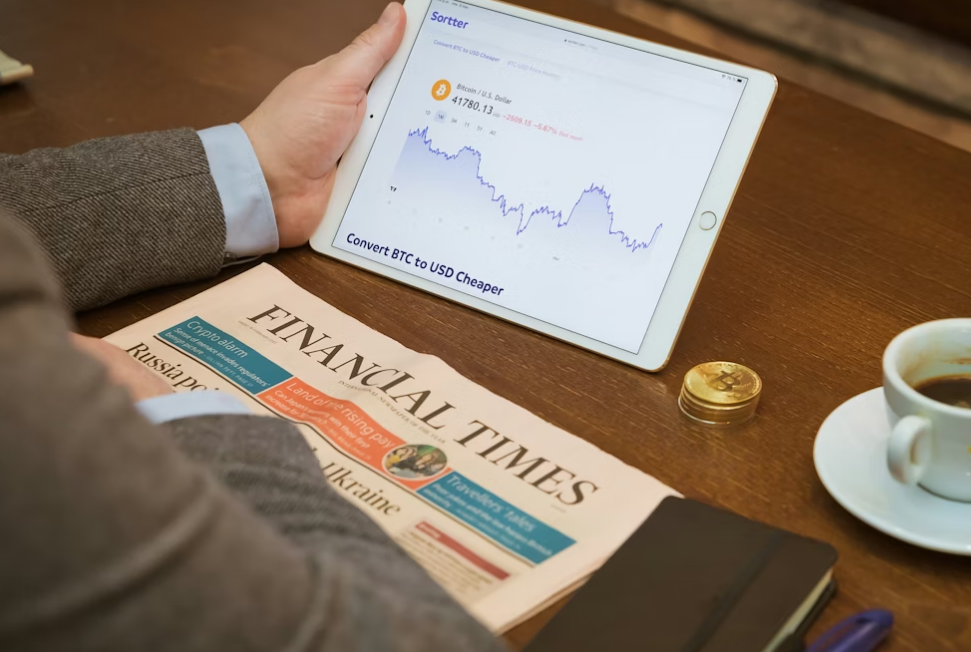
Amid global economic uncertainty, Bitcoin and the US Dollar have become focal points in the financial world. With the rise of decentralized finance and digital assets, Bitcoin as a new asset is constantly challenging the traditional currency system, especially the dominance of the US Dollar. So, can Bitcoin replace the US Dollar and become the dominant currency of the future? Let’s explore the competition between the two and the advantages and challenges they each face.
Bitcoin’s Advantages: Decentralization and Inflation Hedge
One of Bitcoin‘s greatest advantages is its decentralized nature. Unlike traditional currencies controlled by central banks, Bitcoin operates on a blockchain network, avoiding interference from governments and financial institutions. This means Bitcoin is immune to monetary policy influences, particularly in the area of inflation, making it an attractive option for investors looking to hedge against inflation. As central banks worldwide implement quantitative easing, Bitcoin, as a scarce asset, is increasingly drawing investors seeking to avoid currency depreciation.
Moreover, the total supply of Bitcoin is fixed at 21 million coins, which makes it more stable compared to the US Dollar, which can be printed at will by central banks. The limited supply of Bitcoin ensures it cannot be devalued through excessive issuance, making it an effective hedge against USD depreciation.
US Dollar’s Advantages: Stability and Widespread Use
Although Bitcoin is gaining traction, the US Dollar remains the most widely used reserve currency in the world. As the core of the global financial system, the US Dollar holds a pivotal role in international trade, investment, and financial markets, giving it unparalleled liquidity and stability. Central banks globally hold US Dollar reserves, further solidifying the US Dollar‘s position as the dominant global currency.
Another advantage of the US Dollar lies in the robust economic and political backing it has. The US government, through the Federal Reserve, implements monetary policies to effectively manage the liquidity and stability of the US Dollar. During periods of global economic uncertainty, the US Dollar‘s stability provides a relatively safe haven for investors, even though it faces pressures from USD depreciation.
Bitcoin’s Challenges: Volatility and Adoption
Despite its advantages, Bitcoin faces significant challenges. The most obvious problem is its price volatility. While Bitcoin has experienced dramatic price increases, it has also seen sharp declines. For investors, this volatility makes it a risky store of value, especially when compared to the relative stability of the US Dollar.
Furthermore, the widespread adoption of Bitcoin remains limited. While an increasing number of businesses and institutions are starting to accept Bitcoin for payments, it is still far from being a mainstream payment method globally. This limited adoption makes it difficult for Bitcoin to replace the US Dollar and become the world’s dominant currency in the short term.
Conclusion: The Future of Bitcoin and the US Dollar
Bitcoin and the US Dollar each have unique advantages and shortcomings. In the rapidly changing global economy, Bitcoin, as a decentralized, inflation-resistant digital currency, has attracted more and more investors. However, its volatility and limited acceptance remain significant barriers to it replacing the US Dollar.
That said, as technology evolves and digital currencies become more widely used, Bitcoin has the potential to share an important role with the US Dollar in the future. Therefore, investors may consider combining Bitcoin with traditional assets such as the US Dollar to achieve long-term wealth growth.