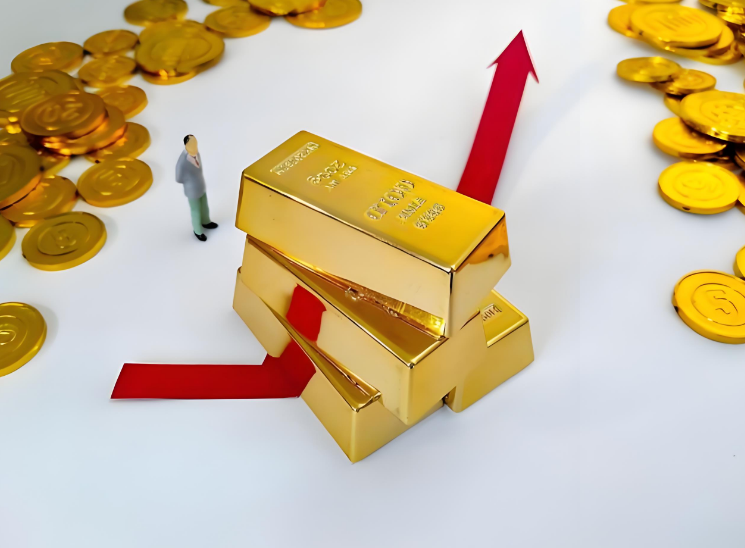
On June 15, the international gold market experienced a strong rebound, with prices rising significantly after a period of consolidation. The rally attracted widespread attention from investors worldwide. As global economic uncertainty increases and expectations for monetary policy shift, gold has once again become a preferred asset for capital allocation. So, what are the main drivers behind this latest surge? This article explores the three key reasons.
A Weaker Dollar Becomes a Major Catalyst for Gold Prices
Gold and the U.S. dollar have traditionally maintained an inverse relationship. Recently, the U.S. Dollar Index has weakened, largely due to concerns about the outlook for the U.S. economy and changing expectations regarding future interest rate policy.
When the dollar declines, gold becomes more affordable for buyers using other currencies, increasing global demand. As more capital flows into the gold market, prices receive additional upward support. Therefore, the performance of the U.S. dollar remains one of the most important factors influencing gold’s short-term direction.
Changing Federal Reserve Expectations Boost Market Sentiment
In addition to currency movements, investor attention is increasingly focused on the upcoming Federal Reserve interest rate decision. Recent economic data has suggested a slowdown in growth, leading many market participants to anticipate a more accommodative monetary policy stance in the future.
For gold, lower interest rate expectations reduce the opportunity cost of holding non-yielding assets. As a result, investors have begun increasing their exposure to gold, making this a significant factor behind the latest rally.
Rising Safe-Haven Demand Drives Capital Inflows
The current global economic environment continues to face significant uncertainty. As a result, many investors are increasing their allocation to safe-haven assets.
Whether due to geopolitical tensions or concerns about economic growth, periods of uncertainty often encourage investors to seek protection in gold. The renewed demand for safety has attracted substantial capital inflows into the gold market, further strengthening upward momentum.
Gold Price Outlook
From a technical perspective, the gold price trend has moved back above important support levels, indicating that the overall market structure remains constructive. If upcoming economic data continues to support expectations for monetary easing, gold could maintain its upward trajectory in the near term.
However, investors should also remain cautious of short-term volatility. A rebound in the U.S. dollar or a shift in market sentiment could trigger temporary corrections.
How Should Investors Respond?
For those interested in gold investment, the current market presents both opportunities and risks. Investors should closely monitor U.S. economic data, Federal Reserve policy signals, and developments in the global economy while maintaining appropriate risk management strategies.
Conclusion
In summary, the sharp rise in international gold prices on June 15 was primarily driven by three factors: a weaker U.S. dollar, changing expectations for Federal Reserve policy, and growing safe-haven demand. Whether gold can extend its gains will largely depend on future economic conditions and monetary policy developments. Staying informed about market trends will be crucial for investors looking to capitalize on opportunities in the gold market.