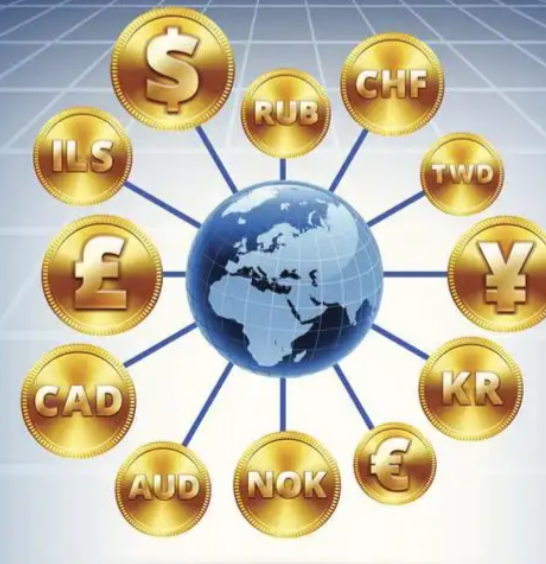
In the global financial market, precious metals are considered important risk-hedging tools, and their prices are significantly influenced by U.S. dollar exchange rates and currency strength fluctuations. When analyzing precious metal prices, investors should not only focus on short-term market movements but also consider long-term macro indicators and European and U.S. central bank policies to develop effective asset allocation strategies.
U.S. dollar exchange rates reflect the strength of the dollar relative to a basket of major currencies. Typically, when the dollar strengthens, prices of precious metals face downward pressure, as dollar-denominated metals become more expensive for non-dollar investors. Conversely, when the dollar weakens, precious metals’ appeal as risk-hedging tools increases, boosting demand and often driving prices higher. Over the long term, the trend of the U.S. dollar is an important reference for predicting precious metal movements.
Additionally, European and U.S. central bank policies are closely linked to the dollar’s strength. Interest rate adjustments in the U.S. and Europe directly affect currency strength, indirectly influencing precious metal prices. For instance, a high interest rate environment may strengthen the dollar and suppress precious metal prices, while accommodative policies often weaken the dollar, increasing the attractiveness of precious metals. Investors should monitor central bank statements and market reactions to interest rate expectation changes to anticipate long-term price trends.
Long-term macro indicators also play a key role in precious metal performance. Inflation rates, GDP growth, and employment data impact the dollar’s strength, indirectly affecting precious metal prices. During periods of economic uncertainty, the risk-hedging feature of precious metals is further emphasized, making them an indispensable asset in investors’ portfolios.
In summary, precious metal prices are closely related to U.S. dollar exchange rates, currency strength, European and U.S. central bank policies, and market interest rate expectation changes. Investors should consider these factors when developing asset allocation strategies to seize long-term investment opportunities in the precious metals market.