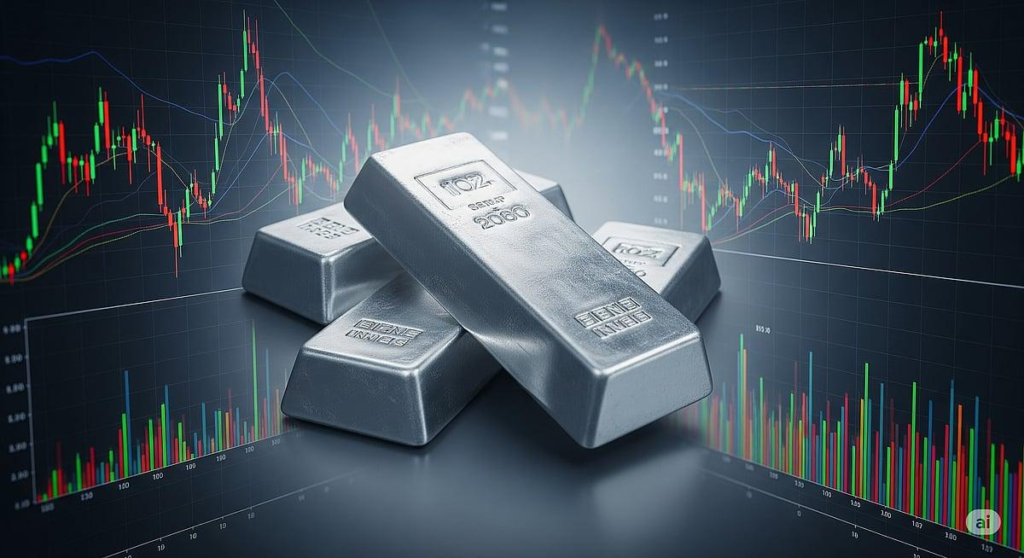
Gold Has Entered a Critical Decision Phase
After a strong rally over the past two years, international gold prices have recently entered a period of high-level volatility. On one hand, slowing global economic growth and rising geopolitical risks continue to support gold prices. On the other hand, changes in U.S. dollar movements and interest rate expectations have created uncertainty in the market.
Many investors are now asking: Has the gold rally come to an end, or is this simply a temporary consolidation before the next move higher?
Why Is Gold Price Moving Sideways?
Recently, gold prices have experienced increased volatility after reaching record highs. One of the main reasons is the changing market expectations surrounding the Federal Reserve’s monetary policy. When investors believe rate cuts may be delayed, gold faces short-term pressure. However, when expectations for lower rates return, gold prices often rebound quickly.
In addition, some investors have taken profits after the strong rally, causing short-term corrections. Therefore, the current movement reflects a market rebalancing between buyers and sellers.
Has the Gold Bull Market Ended?
From a long-term perspective, the factors supporting the gold bull market have not disappeared. Continued gold purchases by global central banks, rising U.S. debt levels, and increasing global economic uncertainty continue to provide long-term support for gold.
Historical market cycles show that periods of consolidation and pullbacks are common during major bull markets. A temporary correction does not necessarily mean the end of an upward trend. As long as global liquidity conditions improve, gold may continue to attract investment demand.
Technical Adjustment Is a Normal Market Process
After a strong rally, any asset can experience a technical adjustment. Gold’s previous gains were significant, and some short-term investors have chosen to lock in profits, leading to a period of market consolidation.
From a technical perspective, as long as gold does not break below key support levels, the current correction may represent a pause within an ongoing uptrend rather than a trend reversal. The market needs time to absorb previous gains and wait for new catalysts.
Safe-Haven Demand Remains Strong
Slowing global growth, geopolitical tensions, and increased financial market uncertainty continue to support gold’s safe-haven appeal. Whenever market risks rise, investors often turn to gold as a defensive asset.
Currently, safe-haven demand remains an important factor supporting gold prices. As long as global risks continue, gold may maintain its long-term investment appeal.
Investor Sentiment Determines Short-Term Direction
In the short term, gold’s performance is heavily influenced by investor sentiment. When markets worry about economic slowdown or expect looser monetary policy, capital tends to flow into gold. However, when risk appetite improves, gold may experience temporary declines.
Therefore, future gold price movements will depend on factors such as Federal Reserve policy, dollar trends, and global economic data.
Conclusion: High-Level Consolidation May Be a Pause Within the Bull Market
Overall, gold’s current high-level volatility appears more like a temporary consolidation phase rather than a signal that the bull market has ended. The long-term fundamentals supporting gold remain largely unchanged.
For investors, short-term price fluctuations may continue, but from a long-term perspective, gold remains an important asset with both safe-haven and portfolio diversification value. The key question now is whether gold can build enough momentum after this adjustment to begin the next phase of its upward trend.