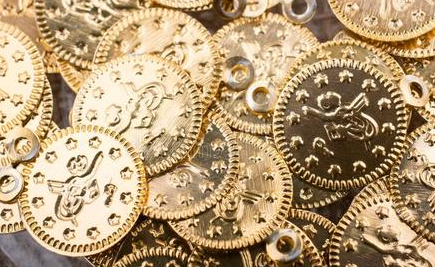
The concept of gold as a safe-haven is not a product of modern financial systems but rather a strategy with a long history. From ancient times to the present, gold has always been regarded as a precious metal with value-preserving properties. Understanding the historical background of gold as a safe-haven helps to reveal why investors choose gold as a key safe-haven asset in uncertain economic environments.
Gold has been considered a symbol of wealth and power since ancient times, particularly in ancient Egypt, Greece, and Rome, where gold was widely used for trade and wealth reserves. Despite the passage of time, gold has maintained its special status. As the financial system gradually developed, gold became the cornerstone of monetary systems until the early 20th century. Many countries pegged their currencies to gold, implementing the gold standard.
The gold standard was widely adopted globally from the mid-19th century. At this time, the value of currency was directly tied to the amount of gold reserves, and the stability of global economies was closely linked to gold reserves. Gold was not only seen as a medium of exchange but also provided asset security during financial crises or wartime. Due to the fixed exchange relationship between gold and currency, many countries viewed it as a stable asset. This period marked the initial establishment of gold’s role as a safe-haven asset.
However, after World War II, the international financial system was rebuilt with the establishment of the Bretton Woods System in 1944, which pegged the US dollar to gold. While the dollar became the world’s primary reserve currency, gold remained seen as the ultimate store of wealth. This system continued until 1971, when President Richard Nixon announced the “dollar-gold decoupling,” marking the end of the gold standard.
Despite this, gold did not lose its status as a safe-haven asset. In the 1970s, global inflation and the oil crisis caused financial market turmoil, prompting many investors to turn back to gold for safety. The price of gold soared during this period, proving its value during times of economic uncertainty. Since then, gold has continued to play its role as a safe-haven asset during financial crises, political unrest, and currency devaluation.
Entering the 21st century, especially after the 2008 global financial crisis, gold once again demonstrated its importance in uncertain environments. During the crisis, as stock markets crashed and banks failed, investors flocked to gold, causing its price to surge. This again confirmed the safe-haven nature of gold.
In conclusion, the historical background of gold as a safe-haven is deeply rooted in economic, financial, and political changes. Whether it is the introduction of the ancient monetary system, the establishment of the gold standard, or the shifts in the modern global financial system, gold has always been a valuable asset that provides security during turbulent times, making it one of the top choices for investors in uncertain periods.